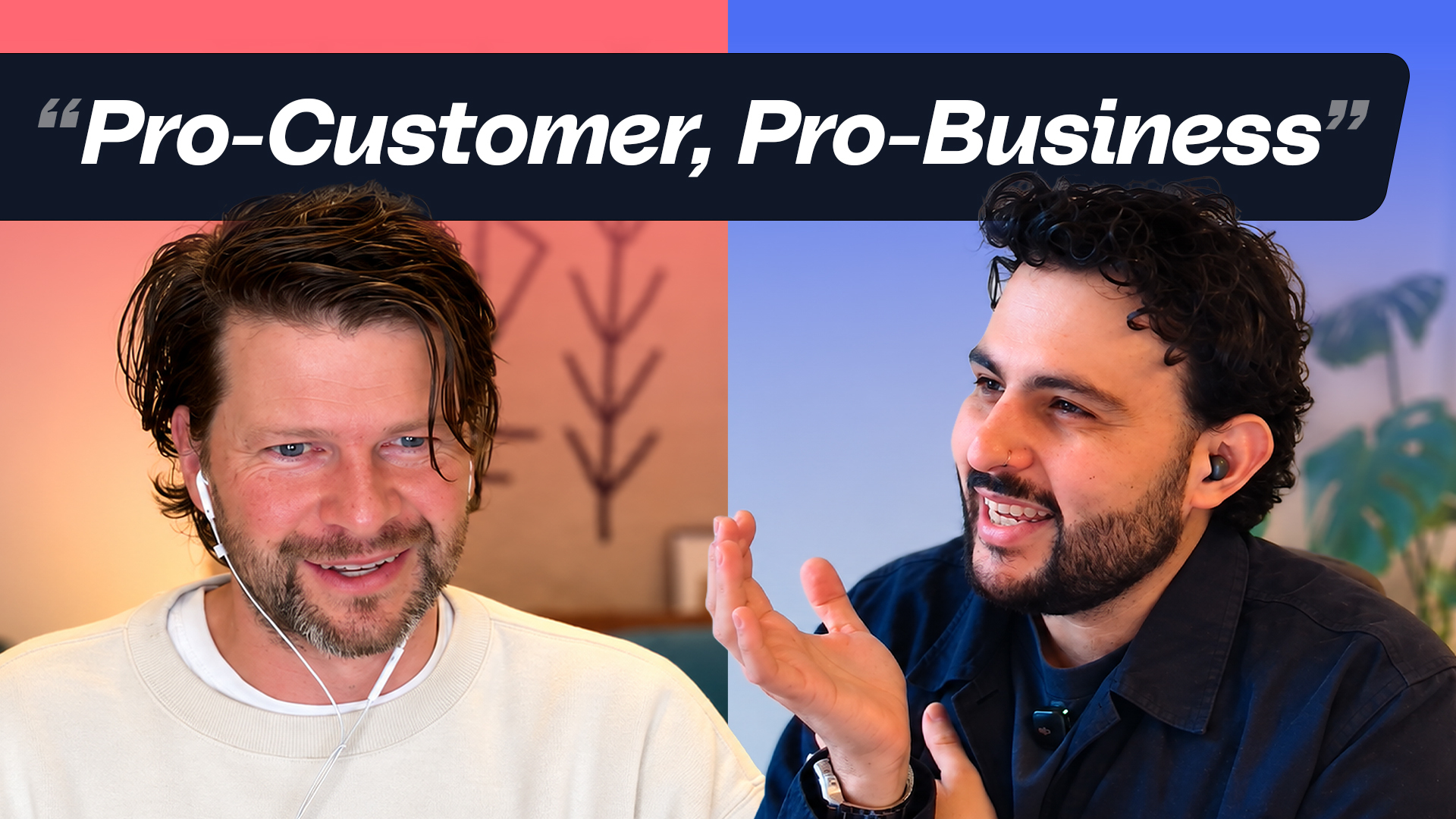
Eric Berkhinfand (00:00)
Hey everyone, I'm Eric and I'm here with Chris, who's the co founder of No Pong. Hey Chris.
Chris (00:06)
Hi, Eric. Great to see you
Eric Berkhinfand (00:08)
Great to see you too. just for a bit of context, very excited to have no like Chris from No Pong here. They're Australia's fastest growing natural deodorant brand
Eric Berkhinfand (00:17)
and it's quite a big name here. they've sold over eleven million tins. Actually, eleven million and one.
Chris (00:26)
Nice. Love your work.
Eric Berkhinfand (00:29)
So I see I stopped over at the supermarket before to pick one up and I'm gonna start trying it now as well. So I'm pumped.
Chris (00:35)
I can't believe we haven't
Chris (00:36)
hooked you guys up. Yeah. All right. We'll we'll we'll
Eric Berkhinfand (00:38)
Well, maybe it maybe
Chris (00:39)
talk about that.
Eric Berkhinfand (00:41)
maybe after this call. but yeah, you guys have been operating as well for eleven years, eleven million tins. So it's no easy feat. So super pumped to get into it and chat about it.
Eric Berkhinfand (00:50)
for those who don't know about you, do you wanna give us a a kind of general founding origin story about how it came to be?
Chris (01:00)
Yeah, yeah. so no pong happened in twenty fifteen. My wife, Melanie, was just who really is the brains behind the product, and a lot of the business really, was just making all of her own skincare for herself. She was just getting really conscious about what she was putting in and on her body. you know, kind of seen her making these concoctions, you know, various different stuff from face creams and you know, some zincs and things like that. And one of them was a deodorant and
Chris (01:29)
We ended up on a surf trip in Indonesia in this tiny little fishing village. I had no no laundry in sight. And so like I kind of ran out of clothes. I just I was just went in the cupboard. My deodorant roll on kind of ran out. And I went in the cupboard and I was like, this won't work, but I'll give it a go. put it on and then next day didn't smell. And I wore the same shirt the next day and the next day, and I was like
Eric Berkhinfand (01:52)
Like, my God, she's on she's on to something.
Chris (01:55)
literally, I was like,
Eric Berkhinfand (01:56)
Yeah.
Chris (01:57)
man, like
Chris (01:58)
This like we've got to do something with this. And so we literally went up to the little village, got a pen and paper, we still got that book somewhere, and wrote like did it just a one-day hackathon, like came up with a strategy and filmed some really cheesy, like, you know, elevator pictures. And yeah, then we kind of took it back to Australia and, you know, made some small batches and then and you know, very quickly we started finding people that were not friends and family buying and were like
Eric Berkhinfand (02:24)
Mm. Mm mm.
Chris (02:26)
What we don't know those people. Who are they? And and then it kind of that grew and we got some really great feedback and yeah, it just kind of took off from there.
Eric Berkhinfand (02:35)
it's not often that somebody just decides to start a deodorant brand. So I mean it's it's it's very cool. so when those people were starting to buy, was that you already selling online already at that point? cause it from that jump of kind of creating it, then you guys what spun up an e-commerce store or something like that soon after?
Chris (02:52)
Yeah.
Chris (02:52)
Yeah, exactly. Yeah, yeah, exactly. So what we did, so what we took the approach of just doing like a one day hackathon and our approach was like if this doesn't work, that's fine. You know, we'll just you know, we've only lost one day's worth of work. So we came up with a name, like registered a URL, worked out how we were gonna ship it, a bit of, you know, kind of like copy and strategy around how we were gonna, you know, present it to to people. And then yeah, like we literally whipped up just a WordPress, a simple, you know, WooCommerce WordPress.
Eric Berkhinfand (03:17)
it was WordPress from
Eric Berkhinfand (03:18)
the beginning. Yeah.
Chris (03:18)
Yeah, it's WordPress. Yeah,
Chris (03:20)
from the beginning. Yeah, yeah, yeah. Just 'cause it's so easy to just do, you know, an install and get running. and yeah, good just started set to running that online and got getting orders. You know, we obviously blasted it out to our kind of friends and family and you know, still got somewhere the very first ever post on Facebook that we did just organically on our own personal accounts going, Hey guys, starting a new thing here, get involved. But yeah, we've we quickly started to find people that were not
Chris (03:47)
that we didn't know. And that's when we started to go, okay, this might have some product to market fit. That's what we're trying to validate at that time, you know, product to market fit. And, you know,
Eric Berkhinfand (03:56)
Mm. Mm.
Chris (03:58)
had a couple of projects before that that, you know, you try and bump start into life and they just didn't have product to market fit. And it's a it's a real hard slog. So, you know, that was a really important thing for us to establish in those really, really early like weeks and months, you know, are there is there a customer, you know, that wants
Chris (04:16)
What we've got.
Eric Berkhinfand (04:17)
and I can imagine at that time the market was very much dominated by Lynx Africa.
Chris (04:25)
Yeah, links. Like
Chris (04:26)
I'm not gonna go on name names here. But we actually
Eric Berkhinfand (04:28)
No, I don't know. It's it's not
Eric Berkhinfand (04:30)
for me, it's not not about putting shade on any of those brands. It's just that like I just remember every guy when I was growing up just smelled the same, which was Lynx Africa. Yeah. Yeah, yeah, yeah. No shade, no shade, no shade. It smells, it smells good. It was just over it was just overdone. Yeah, yeah, yeah. Yeah.
Chris (04:41)
Yeah, yeah, yeah. No. There
Chris (04:49)
are some enormous and powerful brands in the in the deodorant space for sure. And I think that is one of the things that, you know, we're kind of quietly proud of is that a lot of those early customers came to us from traditional deodorants and they'd tell us about it. and they go, you I've been using this deodorant and this deodorant and they never really worked and but you know, no pong like super effective and
Chris (05:10)
Yeah, so that's definitely yeah, little thing we're quietly proud of, just all of the you know
Eric Berkhinfand (05:16)
I mean, it's definitely definitely something to be proud of. I guess going on figuring out that product to market fit as the brand started to grow,
Eric Berkhinfand (05:23)
When did it change from just an idea to something, we've actually got something here that we need to see if we can take it to where its potential?
Chris (05:32)
Yeah, look, it happened pretty it happened pretty quickly. you know, kind of you know, we were spending a little bit on marketing, you know. and it's like it's like anything, I guess, when you just it's a bit like a big heavy boulder and you know, you gotta push it really hard to get get it to get it going.
Eric Berkhinfand (05:48)
That's Sisyphus?
Chris (05:49)
like once
Chris (05:50)
you start to get it moving, like you can just start to tap it along. So we started to see
Eric Berkhinfand (05:54)
Yes.
Chris (05:54)
those lines. We were spending heaps of money, you know, making hardly anything, but we could see that there was momentum here and then, you know, the line started to cross and then we're like, Okay, now it's actually starting to run. and kind of, you know, we're getting, you know, better efficiency out of our marketing spend and you know, and it was
Chris (06:13)
It's starting to work as a business. And that that happened pretty quickly. Like I'd say in the first few months, we kind of knew there was something there. Yeah, yeah.
Eric Berkhinfand (06:18)
really? Okay, that's that's my
Eric Berkhinfand (06:21)
that's that's much quicker than I would have expected,
Eric Berkhinfand (06:23)
It's very quick.
Chris (06:23)
at that stage
Chris (06:24)
we definitely weren't replacing our our income, but we were like, okay, right. This actually
Eric Berkhinfand (06:27)
Yeah, yeah, true.
Chris (06:28)
the numbers are starting to make sense. This is like there's
Eric Berkhinfand (06:30)
Yeah, yeah.
Chris (06:30)
a customer base here and and things are starting to to kind of work as as you'd expect. rather than, you know, just being a heavy boulder that never got lighter, which has can happen
Eric Berkhinfand (06:38)
Mm, mm, mm, mm.
Chris (06:40)
too, you know, you just constantly literally, you know, like a dung beetle for s in on some projects. And so you just gotta know when to kill that those ones, I think, quickly. yeah.
Eric Berkhinfand (06:49)
Yeah. Gotta
Eric Berkhinfand (06:51)
give it the right amount of time, but also not like the like sunk like sunk cost fallacy where you've kind of just 'cause you've invested so much time, you gotta keep going. But no pong wasn't that, which was good.
Chris (06:59)
Last play. Yeah.
Eric Berkhinfand (07:01)
what were were there other natural deodorants on the market like available en masse? Or is it kind of like you kind of go to a a market, a farmer's market vibe and pick up your natural deodorant that the person that you know makes?
Chris (07:17)
Yeah, there was a bit of both, I think. there was a couple of brands that were kind of there around the same time that we were. but you know, honestly, like we didn't really do much market research and we still don't, to be honest. Like we kind of put the blinkers on, run our own race, don't spend too much time looking over the shoulder, because if you do, you spend all your time looking over the shoulder. You know, so you know, we just kind of we just took the approach from the outset. And, you know, in those first few months, I think we realized that
Chris (07:46)
from previous businesses that if you don't have customers, you don't have a business. And so, you know, customer love became our first value and it still is our number
Eric Berkhinfand (07:55)
Mm-hmm.
Chris (07:56)
one value. because we just realized that we wouldn't be here at all without customers. So we just took the approach of, you know, focusing on what on customer feedback, what customers want, and really trying to to steer the business in that direction rather than yeah, focusing on competitors, you know, that they'll do what they
Chris (08:16)
They do, we'll do what we do and yeah. just folks.
Eric Berkhinfand (08:20)
That's and it's it's so true, especially
Eric Berkhinfand (08:22)
when you're like entering into a market where like all the players are humongous, like they're owned by probably multinational companies with like marketing budgets, you know, that are just humongous. It's like there's no point in comparing because you'll always feel like, well, what we can't compete, we can't compete, you know. At least at the beginning, I'm sure you guys now I mean we'll talk about it later, but you're sitting on the supermarket shelves next to a lot of these big players. So that's that's amazing. But yeah, you can't be kind of comparing yourself too much.
Eric Berkhinfand (08:50)
to them at the beginning. yeah.
Chris (08:52)
No,
Chris (08:52)
no. And we honestly didn't. You know, we just th we thought like if we got probably one percent of the deodorant market share in Australia we'd be we'd be home and hose and we've probably beaten that quite by quite a bit by now, but yeah.
Eric Berkhinfand (09:06)
Do you find that with something like deodorant, it's something that's like pretty close to home I imagine it being similar to something like toothpaste. Someone who's using, let's say, Colgate, you're not gonna give them some RLB and then they're gonna just be like, yeah, I'm I'm converted. So I I wonder like, is it with your customers, is it kind of like they try it once and then they flip kind of vibe? Or yeah, hat or is it someone that's looking for it?
Eric Berkhinfand (09:31)
How does the transition come from somebody who's using Lynx Africa?
Chris (09:35)
Yeah. Look, I think I think the main thing that people are surprised at is the effectiveness of nopong.
Eric Berkhinfand (09:44)
Mm.
Chris (09:44)
that's that was the common feedback in the early days. It's still common feedback we get now. you know, it's simple to use, you're easy to apply, but you know, it's it actually works, you know. And I think that's that's just common. Like, I mean, you buy deodorant.
Chris (09:59)
You don't want to be there like three in the afternoon, catch a whiff and you wonder if it's you, you know. so
Eric Berkhinfand (10:04)
Yeah, yeah. That's about yeah, yeah.
Chris (10:06)
yeah, yeah. So it's about it's about whether the product actually works. so yeah, I think that's been a kind of cornerstone of of the business. And look, you know, we named it no pong.
Eric Berkhinfand (10:15)
Nice.
Chris (10:15)
We're pretty straight shooters, designed to do what it says on
Eric Berkhinfand (10:18)
Nice.
Chris (10:18)
the tip.
Eric Berkhinfand (10:20)
Is it is no pong is that an Australian kind of thing or is that everything? Is that like the
Chris (10:27)
It's definitely
Chris (10:28)
a British Aussie kind of slang turn up. Yeah, I'd say yeah, British
Eric Berkhinfand (10:30)
Brit or British Aussie. Yeah, British Aussie slang slangy.
Chris (10:33)
Aussie slang. Yeah. yeah, probably it doesn't resonate quite as well in North America. and you know, Europe
Eric Berkhinfand (10:39)
Mm-hmm.
Chris (10:40)
there's so many different languages, that it probably just won't make any sense at all to anyway.
Eric Berkhinfand (10:45)
Yeah, yeah, true, true. and then I guess back on the customer love point, I did check out your reviews and I think you guys have stayed true to that. Cause honestly, the reviews were pretty amazing. I think everybody was just obsessed. And they were coming in, they were I was like, wow, there's a lot. Like they had been coming in over the past couple of days. They were all pretty recent. I think I I saw one where they just maybe one out of a hundred where they weren't really happy and you know.
Eric Berkhinfand (11:14)
That that's gonna happen, of course, with with everyone. I think it the product may have been good, but it just wasn't for them or whatever the the reason is. But it was impressive that you guys have kind of stood to that because yeah, it was for a deodorant it's like it's deodorant. Like I most pe you wouldn't expect people to leave like a review for deodorant. It's just kind of one of those things you get from the pharmacy and move on with your life. and
Chris (11:35)
Yes.
Eric Berkhinfand (11:36)
but just to see people being so pumped and I was just like, okay, you guys have definitely built something more than just this product.
Eric Berkhinfand (11:43)
Well, the product's amazing, but the summing more as well.
Chris (11:46)
Yeah, yeah, yeah. Yeah, definitely. Like it's it is pretty crazy. You do think about it as just one of those things that doesn't take much, you know, mental space in your in your ad or life. But
Eric Berkhinfand (11:52)
Yeah. Yeah.
Chris (11:54)
yeah, we definitely have some customers that are pretty, pretty like, you know, pretty pumped on the product and also like a community. So we've got you know, a little pr private Facebook community where, you know, we've got some really, really awesome customers that kind of chat and
Chris (12:09)
you know, chat with each other. It's like we're, you know, kind of involved in some of the conversations, but they're definitely, you know, it's a it's a community where they're kind of contributing with each other. And yeah, it's
Eric Berkhinfand (12:19)
Amazing.
Chris (12:19)
definitely a yeah, I mean another thing is like we've just we find a lot of people getting either their friends or their partners, you know, onto no pong, like, you know, they'll they'll start with, you know, one person in the house and then it'll be the whole household and yeah, so definitely definitely
Eric Berkhinfand (12:35)
Again, for
Eric Berkhinfand (12:36)
su s for something that's so personal with like your deodorant, I think there's no ad on TV, Google ad, you know, f you even UGC content that's gonna be more powerful than s like a someone that you trust, like a family or a friend member being like, You gotta try this, or you smelling them and being like, Wow, you smell amazing, what's going on? Like last week you stunk, now you smell amazing.
Chris (12:59)
Yeah, is that the gift of freshness.
Chris (13:04)
Yeah, yeah, so
Eric Berkhinfand (13:04)
Yeah, they get to freshness. Yeah. Amazing.
Eric Berkhinfand (13:08)
So you guys have been operating now for as I said, well, it's eleven eleven years, Has there been, I guess, a plan from the beginning which you've stuck to? or has this plan and has the strategy kind of evolved as the business has grown?
Chris (13:23)
Yeah. we were joking with one of our our coaches the other day that we don't it we don't even know how to do a business plan 'cause we've never done one. But
Eric Berkhinfand (13:31)
Okay. All right.
Chris (13:32)
Yeah, no, but like semi in joke. But I think when when a business is really small, they're like they're kind of very fragile things, you know. Anything could take you down and you know, you could have a website outage and then you can't make any sales and you know and and they're fragile.
Chris (13:49)
I think it's very much similar to kind of growing a plant or a garden. You know, we used to love gardening, you know, back in our days in Sydney actually. and you know, when a when a little seedling is very small, it's very fragile, you need to, you know, give it what it needs, the right amount of, you know, food, water, light, you know, to get it to a point where it's, you know, strong enough to to stand on its own two feet and won't just blow over in the wind.
Chris (14:13)
you know, and and a business is is very much the same, I think. So it's just recognizing what the business needed, listening to customers constantly, and shaping the business to what you know, our our customers were telling us that they wanted. and then on the back end of us, like what we'd have to give the business what it needed to, you know, work operationally from a product perspective, you know, from a finance and reporting perspective. So yeah, definitely.
Chris (14:41)
first few years we're we're growing, you know, the systems and putting those things in place. and probably less of a business plan and more of, you know, kind of gr growing it, literally. but yeah, we're
Eric Berkhinfand (14:55)
Yeah.
Chris (14:55)
definitely now at the at the stage where we're kind of starting to actively plan, you know, for our next stages of growth.
Eric Berkhinfand (15:03)
Nice. And then since it is a brand and a product which is so focused around the customer, how like along those eleven years, like how has customer feedback shaped and changed the the product and the and the business?
Chris (15:20)
Yeah. well, look, I mean, we pretty much don't release a product unless we've had customer feedback on it. so, you know, customers will shape our our feedback on new formulations or new fragrances and then, you know, what we'll often do is a small, small run. again, we still wanna validate product and market fit on new products. We treat it, you know, as anything, you know, if people don't want it, we don't want to make it.
Chris (15:47)
So that's no good for anyone. So we we'll run a kind of limited edition, we'll test it, we'll always get feed like literally survey, get feedback from the market and then you know, then then launch it as a as a ongoing product. And I think that's an approach, particularly the supermarket guys have have appreciated. because when we put
Eric Berkhinfand (16:06)
Mm.
Chris (16:07)
something on forward in a range review, for example, like it's it's tested. There is a customer there for it.
Eric Berkhinfand (16:13)
Interesting, one one thing that's just so fascinating to me, it's a bit of a sidestep,
Eric Berkhinfand (16:16)
you don't live in Australia full time now, right?
Chris (16:20)
No, no, we don't. No, we don't. We were we were living in Australia. If we were in Sydney when we started the business, Melanie was working she's a midwife as well. she was working in a hospital in Sydney and I was working in some, you know, media agencies down in the CBD of Sydney. yeah, and we've we reasonably soon after starting no pong, like I'd say six to nine months, Melanie took up a volunteering gig in Tanzania.
Chris (16:49)
And so we picked
Eric Berkhinfand (16:50)
Nice.
Chris (16:50)
up our lives, moved to Tanzania, continued to run the business
Eric Berkhinfand (16:54)
it's a fully remote business. how does that shape how you've decided to grow and run the business? Because obviously the first thing would be if you run a business from one location, you're obviously gonna get an office so that when you hire team members, they can come to the office and you know, at least
Eric Berkhinfand (17:11)
There might be some remote options, but there normally is at least a place of business that everybody can come to, especially if there's going to be packaging and supplying and and things like that. So I guess it's fascinating to me because I don't think there are I d I c I don't know how many like deodorant and direct to consumer brands there are that are remote, but how has that kind of shaped how no pong has grown and the decisions that you've made? Cause I assume they would have been very intentional.
Chris (17:35)
Yeah, they were very intentional. Look, we had to find ways that we could kind of scale a business and grow without being physically there. So that was, you know, part of our early day challenges. Like how do we fulfill, you know, mail logistics and get ordership? You know, how do we kind of manage manufacturing and get that scaled up, you know, but but using our formulations. so you know, we've kind of found some, you know, some external ways of doing that. and, you know, having acts, like I mean, most of our team is remote today.
Chris (18:03)
but we also do have a warehouse. So we do have like our own warehouse with, you know, team that go in there every day, that are kind of, you know, making sure orders get out the door, you know, making sure we've got some office management stuff up there as well, some admin. those guys are awesome. So we do have some it's a it's a mix now, but you know, I think it also does
Eric Berkhinfand (18:22)
Mm.
Chris (18:22)
mean that you've got access to people like all over the place who are like guns
Eric Berkhinfand (18:28)
That's true.
Chris (18:29)
that you know you might not have access to if you were
Chris (18:33)
constrained to a physical location. So so that's definitely
Eric Berkhinfand (18:36)
Mm-hmm.
Chris (18:37)
a benefit. And I think, you know, during COVID, which was obviously a a difficult time for him, we were already fully remote. So it didn't nothing really changed for us in terms of the way we worked. So so that was kind
Eric Berkhinfand (18:47)
Hm.
Chris (18:48)
of, you know, one of the nice things about COVID, I guess. You know, but from a business perspective it didn't really impact us.
Eric Berkhinfand (18:56)
That's that that's interesting. And do you think like the remote aspect has been in general a like a constraining element or the element that's actually made no pong what it is and kind of instrumental in your success?
Chris (19:10)
Yeah, look, I wouldn't say it's constraining. I wouldn't say it's instrumental. It's just how we built it. Yeah, it's
Eric Berkhinfand (19:15)
It just how it just is how it is. Yeah. Yeah.
Chris (19:17)
just how we built it. I I mean what it does mean is that we have had to focus extremely hard on culture. because
Eric Berkhinfand (19:25)
Mm.
Chris (19:26)
if everyone's remote, like no one you're not sit you know, you know, sitting next to someone, you can't hold them accountable for something that ha you know, you can't just go and have a chat with them or a coffee at the water cooler, you know, in the kitchen. So like
Chris (19:38)
You know, culture and maintaining that culture, I think, has been, you know, something we've put a huge amount of time and effort thinking about and and I guess implementing. we've got a really clear set of values and and sub values and behaviours that I guess sit higher than the law, really. You know, we've got policies obviously, but I would love to be in a world where we just didn't need any policies at all. Obviously there's and S and a few, you know, stuff like that for warehouses. But you if you had if you could get rid of all policies.
Chris (20:08)
And just have the values because everyone was, you know, acting in the best interest of the business, you know, helping each other succeed, you know, focusing on the customer, things like that. That, you know, that's the ideal world I'd love to get to.
Eric Berkhinfand (20:22)
Yeah, and
Eric Berkhinfand (20:23)
then then you have to meet somewhere between like ideal and reality.
Eric Berkhinfand (20:26)
just for context, how big is the team?
Chris (20:30)
there's just over 20 of us now. I'm hiring a couple of people at the moment. so yeah, yeah, it's gotten to that point where you know it's a good sized team. We've got some really great people in each of the pillars of the business. We kind of break a business as I guess most businesses would fall under six main things that they do: sales, marketing, product, finance, operations, and people. So we've got
Eric Berkhinfand (20:54)
Nice.
Chris (20:54)
kind of good people.
Chris (20:56)
running each of those we've got enough people now to kind of, you know, for those pillars to to run, which is which is awesome.
Eric Berkhinfand (21:02)
Mm-hmm.
Eric Berkhinfand (21:03)
And how has yours and Melanie's role as the co-founders, obviously starting as a two-person hackathon situation, how is how have your roles evolved?
Chris (21:17)
Well, look, Melanie and I have very complimentary skill sets, which has been great. As a husband and wife team, you know, it's we kind of live and breathe it twenty four seven ultimately. but she is very, very strong analytically, you know, operationally. she's the kind of mastermind of the product. so and she's amazing with people. you know, I guess her midwifery background and kind of she's got a
Chris (21:42)
a science degree in neuropsychology. So she kind of understands how people think and behave. So much much better than I do. And yeah and so but on my end I kind of have a bit of a marketing background, probably a little bit more on the tech side and you know, we're both across finance.
Eric Berkhinfand (22:00)
Nice.
Chris (22:01)
so yeah we kind of split split the business like that.
Chris (22:05)
but yeah, in terms of the day to day, we look we definitely have an amazing team in each of those areas and like our goal is to hire people that are better than us, you know, at things. And we definitely, you know, have some people that are way better than us at some of the things that we used to do. So, you know, that that's the goal. And you know, we're kind of handing more and more responsibility and ownership to to the team these days, which has been great. And we're trying to think a bit more strategically about that long term planning and vision.
Eric Berkhinfand (22:33)
Amazing, amazing.
Eric Berkhinfand (22:34)
So I guess to move into your expertise, which is marketing, what have been the I guess most important marketing channels for no pong in terms of growing your business to where it is today?
Chris (22:50)
yeah, well look, I guess like a lot of brands, and ten years ago I think the market was quite different. Like we know we started with some Facebook ads and some Google ads, and one of the things that we noticed pretty quickly was the because no there was no search volume for for no pong. It just didn't exist as a term. So we we were running some Facebook ads and noticed that we were starting to see people searching for no pong on Google ads. They're like, wow, that's kind of like a a virtuous circle that's happening. So, you know, we obviously built that, but I think we realized
Chris (23:18)
you know, over time that you can only build a credible brand. You can only get so far running Facebook ads and, you know, and Google ads in terms of trust and credibility. So I guess over time we just started to realise that, you know, there was other channels that we needed to to focus on and we needed to get beyond the ad in a way. You know, we needed to kind of start building community and rather than just kind of like blasting ads at people, having two way conversations with them on those channels. So
Chris (23:48)
You know, it definitely was not at the time actually one of my friends worked at Facebook and saw that we were replying to everything, you know, every single comment, every and
Eric Berkhinfand (23:57)
All the f like all all the Facebook comments, yeah.
Chris (23:59)
Yeah, yeah, literally everything. She's like, that is not best practice. Like, what are you guys doing? Like, well, we care, like everybody here, you know, has had an opinion, good or bad, you know, and and we're gonna make them feel recognized and heard and you know, not just a you know, just a comment into the void, just to
Chris (24:18)
that you know know that we are here, that we're real people behind it. And, you know, I guess that's kind of grown. We've now got kind of a private Facebook community. We've still got all of those kind of online communities that we kind of interact with, you know, in fact a team that kind of looks after that now. and then outside of that, other marketing channels that we are using today, I I guess more focused around brand building. You know, if you looked at our split between like the long of it,
Chris (24:47)
call that brand building and the short of it call that direct response. You know, the long of it part is, you know, at least sixty percent of, you know, of where our budget goes these days. And that's things like T V.
Eric Berkhinfand (24:56)
So the long is
Eric Berkhinfand (24:57)
the the longer yeah, the longer it is like all that that those paid ad channels.
Chris (25:02)
Yeah, paid ad channels. Yeah, paid ad ad channels, whether it's like experiential in person stuff, TV, we run some TV marketing, or you know, some retail out of home, you know, focusing in around supermarkets and just trying to, you know, get out of the feed, you know, in you know. So yeah.
Eric Berkhinfand (25:23)
Yeah. In in real life. Yeah. Yeah.
Chris (25:26)
In real life, yeah, exactly.
Eric Berkhinfand (25:28)
Amazing. And then to talk about the supermarket, because I think that is super interesting. And that's I actually picked up. I of course would have preferred to order it online from you guys. And the next one will be an online purchase 100%. But so convenient for me to be able to stop by. You guys are in Coles and Woolworths, I think both of them. which are the two, which are for everyone, anyone who's outside of Australia are the two biggest supermarkets here. if you're going shopping in Australia.
Eric Berkhinfand (25:58)
It's likely one of those two, maybe Aldi, but those are these are the big ones you want to be in. I mean, how how does that is that something that was the plan from the beginning? I mean, I or at some point did that yeah. It's it's fascinating to me because I would not have the slightest idea about how you start selling something in a supermarket.
Chris (26:17)
It's yeah, that's an interesting one. it was never the plan. In fact, there was quite a lot of resistance when the opportunity first presented itself. you know, I personally was like kind of crapping myself about the idea we had a pretty good online business at the time and I was like, these guys are just gonna chew us up and spit us out. And we also had like we at that time we had, you know, quite a few wholesale customers that, you know, like tended to be independent health food shops or, you know, pharmacies that, you know,
Chris (26:45)
could be part of a chain, but were still able to make their own buying decisions, you know, franchisees. and obviously
Eric Berkhinfand (26:47)
Mm. Mm. Mm.
Chris (26:50)
we didn't want to upset them by going into a giant supermarket and, you know, you can imagine some of the things going through our head, you know, people thinking we've sold out or like, you know,
Eric Berkhinfand (27:01)
Yeah.
Chris (27:03)
these kind of things. And so there was quite a lot of resistance, a lot of thought went into it. We thought they were going to cannibalize our online sales.
Chris (27:10)
so it was not a decision we've taken lightly. but you know, I guess we started small in there, with three SKUs and then that kind of grew. Every range review we've kind of added SKUs, even though the buyers, generally speaking, have been trying to shrink the amount of SKUs that they have ranged by kind of more than ten percent each year. We've been able to kind of grow. So that's in resulted us in a in a s growing sh growing share of s of shelf.
Chris (27:39)
Which has been pretty awesome. And yeah, we've managed to grow that more than any other brands in the last five or so years in supermarkets. So it's actually worked out really well. probably about fifty percent of the business is now wholesale, including Woolies and and Coles
Eric Berkhinfand (27:54)
huh.
Chris (27:56)
and including all of those independent stockers that
Eric Berkhinfand (28:00)
That's amazing.
Chris (28:00)
still buy from us. And then, you know, fifty percent is is the key kind of e commerce. So it's an it's a nice split. you know.
Chris (28:08)
You not don't ha not having all your eggs in in one basket or the other.
Eric Berkhinfand (28:12)
Interesting. And I guess the thing is that of course it's another way of distributing the product. But I think the thing about the supermarket, which is so powerful, is that it is marketing too. Because now suddenly somebody who's just going and doing their shopping, they might not buy it on their first one, they might not buy it on their second one. But especially if you got if you decide to run a sale, there they might be like, Okay, I'm about to run out of deodorant, let's give it a crack. And
Eric Berkhinfand (28:38)
So it is marketing too and very powerful marketing channel.
Chris (28:42)
Totally, totally. Look, you share sh of shelf space is something we've been able to grow, you know, over time. And so I think in wool woolies we've got like nine SKUs, which takes up a fair bit of the of the shelf and w considering that we're like sixty millimeters wide and very small footprint, you know, we're we're not that visible to to start with. so it definitely is visibility. in terms of promotion,
Eric Berkhinfand (29:03)
Yeah, true.
Chris (29:05)
like you know, we try and run as little price promotion as we can actually.
Chris (29:10)
And try and sell as much as we can at full price and it's been working. you see some of our, you know, we get the scan data from other brands in there and they might be on like twenty six weeks a year of of discounts where you
Eric Berkhinfand (29:21)
Sales.
Chris (29:21)
know, it's almost half but that's half the year. every other week that are on a discount and we kinda we're on like eight, you know, one third the amount type of thing and and still managing to beat some of these guys. So so that's pretty cool. And I guess that comes back to just building a brand that, you know, customers love and you know, really kind of
Chris (29:40)
I guess, you know, making sure that customer love value is at the heart of everything that we kind of say and everything that we do and, you know, how we interact with customers.
Eric Berkhinfand (29:49)
Nice, nice. And then in terms of the I guess interplay between the supermarket and then the e commerce customer, I'd imagine that you would prefer that if they were to buy it in the supermarket on the first time, maybe they would transition to becoming an online customer and buy from you direct. Correct me if correct me if I'm wrong on that. Maybe you want them to purchase from supermarkets all the time.
Chris (30:13)
Yeah, you know, look, it's a we've spent a lot of time thinking about like attribution and like how how do we we can't obviously have don't have the same resolution as we do using Metorik of to a what we can see, you know, with our online sales. But I think they're that they're kinda different shoppers. look, there's definitely some overlap and without question there's customers that have started with us and then gone to supermarkets because it's you know, it's more convenient.
Eric Berkhinfand (30:39)
Both ways,
Eric Berkhinfand (30:40)
more convenient. Yeah.
Chris (30:40)
Both ways
Chris (30:41)
and we see the comments, you know, we see people messaging us, hey, saw you guys in Woolworths, I get it from Woolworths now. Without doubt, they've gone the other way as well. You know, they've seen us in Woolworths,
Eric Berkhinfand (30:49)
Yeah, yeah.
Chris (30:49)
different you know, it's given it bit more credibility to brand. and one thing that we're kind of focusing on right now a little bit more is just to make sure we've got a different set of products on the website that we have in supermarket, and kind of,
Eric Berkhinfand (31:03)
Interesting.
Chris (31:04)
you know,
Chris (31:05)
And and also turning the website into a bit more of a destination rather than just,
Eric Berkhinfand (31:09)
Hm.
Chris (31:10)
you know, a catalogue, which a lot of e commerce stores are, you know, you know, so kind of throwing like online events, or you know, doing limited edition drops, things like that. So yeah, trying to trying to segment what we do in each channel. Yeah, that way.
Eric Berkhinfand (31:28)
Interesting.
Eric Berkhinfand (31:29)
So that yeah, that there's there's a reason more than just price or convenience to to shop on in one or the other.
Chris (31:36)
Yeah, exactly. Exactly.
Eric Berkhinfand (31:39)
And then okay, I guess to maybe then transition to talking more about the website and maybe a bit more nerdy and and tech tech side of things. You guys are on WooCommerce. I guess when you chose Woo at the beginning, the eCommerce landscape was wildly different. I mean, Shopify was probably around, but much smaller and and not the beast that it's become today in e-commerce.
Eric Berkhinfand (32:03)
have you found WooCommerce as your platform for your journey? and maybe has there been a point where you thought maybe we should be moving platforms? or are you happy with it and you know it it serves what you need?
Chris (32:20)
Yeah, great question. Woo was so easy to get started with. and for the first couple of years I'd say it was it was great. cranking for us. Really, you know, I just love the fact that you could customize everything fairly easily, you know, add you could add functionality without, you know, I guess having to add plus plus subscriptions on on top of things. But we do get to the point
Eric Berkhinfand (32:41)
Hmm.
Chris (32:41)
there in our early days because we started as kind of a self hosted thing, where like
Chris (32:48)
our hosting couldn't keep up with the size of the database was growing because of the sales were going up. And and we were getting like, you know, a bit of website crashing behavior. And, you know, and that's that's yeah, it was pretty hectic actually. And we so we did look at Shopify and Big Commerce, spent about two years of well
Eric Berkhinfand (33:07)
Whoa, okay.
Chris (33:08)
yeah, about doing due diligence on these platforms, spent about a hundred grand or more on, you know, on dev with
Chris (33:16)
Shopify devs and big commerce devs to try and replicate ultimately what Woo does out of the box. And we came full circle and we ended up back with Woo. We found I'll give a shout out to our current devs, SauCal who are amazing and and they literally
Eric Berkhinfand (33:32)
Nice.
Chris (33:33)
transformed transformed our website.
Eric Berkhinfand (33:35)
Mitch and Dom.
Chris (33:37)
Mitch and Dom legends. Yep. And the whole and Matty as well. Yeah. Total legends. So
Eric Berkhinfand (33:38)
Mitch and Dom yeah, we love Nice. Love it. I love it.
Chris (33:44)
yeah, they transformed our business.
Chris (33:46)
more or less overnight, got it stable, got it running, got us on some proper infrastructure. and you know, I think the thing that we love about Woo now is literally I do believe that anything is possible. and it it's and it also doesn't require, you know, another monthly subscription of whatever plus a clip of the ticket on revenue to just add something simple
Eric Berkhinfand (34:06)
Yeah, yeah.
Chris (34:06)
like recurring subscriptions, you know. so yeah,
Eric Berkhinfand (34:11)
Yeah, yeah. Totally.
Chris (34:12)
yeah. So we just found I mean
Chris (34:15)
It's little bit like Android versus iOS, I guess. You know, iOS is great for some people, it's great apps, but you pay for everything, you know, but WooCommerce obviously being a bit more open source, a bit more like Android, more customizable and you know, you can you can just do stuff. You can do what you want to do without those restrictions. So yeah, so it's good.
Eric Berkhinfand (34:35)
So you got you you you're locked in on Woo
Chris (34:37)
We're locked in on Woo yeah, yeah, love it. Yeah.
Eric Berkhinfand (34:40)
Love that. Nice, nice.
Eric Berkhinfand (34:41)
Yeah, I think I think it's one of those things where it's like the the power of woo can sometimes be it's it's shortcoming. And I guess that's what you experience is like you were able to get it up and running, but you might not realize that, you know, slowly the database is starting to accumulate orders and yeah, and then one day it's just kind of like bang, and then you start getting crashes and things like that. And if you don't have the right team or somebody who knows how to handle these infrastructure things.
Eric Berkhinfand (35:08)
You know, it can be a bit of a a panic state where I guess that's where something like Shopify might handle that a bit better. But when you know what you're doing and you have the right people behind you, boy, is it powerful and amazing.
Chris (35:21)
it's incredible. Yeah. I we we've gone from yeah, ha holding our head in the hands, literally, when things were crashing, to to now believing anything is possible. And yeah, the guys at SauCal are just so awesome to work with as well. And that yeah, we've just re deployed a bit of a a theme change, site's going faster than ever. So yeah, just yeah, it's awesome. Yeah, love it.
Eric Berkhinfand (35:41)
Nice.
Eric Berkhinfand (35:42)
And and I I saw on your your site, I'm not sure how long you've been running subscriptions for, but it looks like you have a like a subscription for no punk deodorant. how long has that been running for now?
Chris (35:57)
Yeah, look, almost since the outlet, like in the first few months, I think we set up monthly club. Like, yeah, if you if
Eric Berkhinfand (36:01)
so it's I had no idea. Okay.
Chris (36:03)
you yeah, if you cast your mind back down to, you know, twenty fifteen, I guess it was like subscriptions were all a rage. You know, there was Dollar Shave Club and you know, it was in that day where, you know, all everything was a subscription.
Eric Berkhinfand (36:10)
Yeah, yeah, yeah. Yeah, yeah. Who gives a c
Eric Berkhinfand (36:14)
who who gives who gives a crap as well? Yeah. Yeah.
Chris (36:16)
Who gives a cap, yeah, yep. So
Chris (36:18)
but honestly, I think what we've found is we first of all, we've never really promoted subscriptions. we've just had them organically on the site and people that want them jump on there for the convenience. it's a little bit cheaper as well, from a shipping perspective, but it hasn't really been a focus for us for the business. And you know, as we've launched new products, like we find people just jump off subscription and just they just want to try a new product or you know, on different size or
Chris (36:46)
You know, so
Eric Berkhinfand (36:47)
Mm.
Chris (36:49)
it's definitely some I mean, we each month like we kinda have a look at our customer base using Metorik and we see people that have just ticked over the hundredth order. And so, you know, I don't have a mass on the top of my head I should be able to do this, but a hundred orders divided about by, you know, twelve months is you know, we've got people literally back to twenty I think end of twenty fifteen, you know, that are still ordering today.
Chris (37:17)
and you know, and typically they're all monthly club people. and
Eric Berkhinfand (37:21)
Yeah.
Chris (37:21)
yeah, so we see that, send a little video, send them a little gift, which is nice. No.
Eric Berkhinfand (37:26)
I mean,
Eric Berkhinfand (37:27)
it definitely is a product that lends itself to a subscription model. I think I guess in the same way that with who gives a crap, you know, you you're gonna go to the toilet every single day, depending on the amount of members you have in your house. It's not rocket science to figure out how often you know, you need toilet paper delivered. And I guess probably in a similar sense with Deodorant too. Is a do you guys think that maybe you might move the subscriptions
Eric Berkhinfand (37:56)
to a bit more of a primary spot on the website, or you kinda happy with with how it lies?
Chris (38:01)
I think we're kinda we're kinda happy with where it lies. You know, I think one of the things that people do need to be able to do and actually like I mean some people do, some people don't, but you know, some of those orders that we've got still on monthly club from twenty fifteen are literally still buying no Pong Original. I've never tried anything else.
Eric Berkhinfand (38:17)
Love it.
Chris (38:18)
You know, 'cause when we're you know, we'll pull a the list of orders up in Metteric and we'll go, Okay, right, what do we reckon this person's favorite, you know, tin is and some of them have tried everything, you know, they've switched their subscription over.
Eric Berkhinfand (38:29)
Yeah, yeah. Yeah.
Chris (38:30)
and some of them
Chris (38:30)
are just die hard for it. So I think, you know, for us, the subscription's there like for the customers that want it. and you know, for people that just want flexibility and to to try a bunch of other things, then that's that's also there. So it's again just about giving the giving the customers what they want.
Eric Berkhinfand (38:50)
Nice. All right. And then since you brought it up about analytics and Metorik let's let's let's have a quick chat about that.
Chris (38:58)
Yeah, yeah.
Eric Berkhinfand (38:58)
So I'm I'm curious to hear in general, how have you guys used Metorik and yeah, what what are you when you're in there, what are you looking at?
Chris (39:09)
everything. Metorik has just given us so much visibility over so many dimensions of the business that we never had before, definitely not with the Woo Reporting or any other analytics platform.
Eric Berkhinfand (39:22)
Mm-hmm.
Chris (39:24)
these days, what we're actually spending a lot of time, you know, so there's obviously custom behavior, there's some functional stuff that the customer love team, you know, jump in and look at someone's you know, past order history.
Chris (39:37)
you know, what they've been ordering, you know, obviously defining segments and different cohorts that we might want to kind of remarket to, or even like, you know, if something's gone like let's say there's sh sh shipping error or something, you know, has happened that you know we want to kind of rectify, then we can find that cohort of customers really easily. in Metorik you know, with all the segmentation ability that's that's in there. we've used it to to find
Chris (40:04)
Audiences for email sends. Like, I mean, it's like truly never there is no end to this list. but What we've been finding really awesome lately is is the Metorik MCP and pulling that through into our Claude.
Eric Berkhinfand (40:16)
Mm.
Chris (40:17)
yeah. So I think being able to pull context from a whole bunch of different data sources into one place just allows that's a that's a game changer, you know. So I mean you've got
Chris (40:31)
Let's say you've got Google Analytics data over here, you've got, you know, let's say track suit, our brand tracking data there. None of these things speak to each other. Then we've got website sales over here. As independent platforms, they don't speak to each other. But if we want to do some analysis and compare all three, bam, we can pull it through. The MCP will go and grab, you know, all the the Metorik data and and we can do some some amazing things now analytically, which is which is pretty awesome. Yeah. I mean, another just day to day thing that we're using the MCP is to audit our 3 PL.
Chris (41:01)
shipping invoices, our Canadian three pill, dumps out, you know, I think we had one invoice list that was 80,000 rows in Excel. You can imagine trying to match that against orders in Excel, like with pivot tables
Eric Berkhinfand (41:12)
Wow.
Chris (41:13)
and V lookups. You know, we wrote a little skill that pulls the order data out of the Metorik MCP, matches line by line, tells us if we were overcharged or those duplicates.
Chris (41:27)
so yeah.
Eric Berkhinfand (41:29)
Yeah.
Chris (41:29)
Access to data th by from Metorik is awesome.
Eric Berkhinfand (41:33)
It's it's honestly so fascinating and amazing for me and I'm sure the rest of the team after to hear this because it's such a big app and we're often building these features and things. We're you know, we don't run an eCommerce store we run a SaaS so we're obviously trying to obviously talk with customers, but also try to foreshadow what people will be using it for. But I mean
Eric Berkhinfand (41:56)
I can guarantee you when we were launching, you know, the MCP stuff, we weren't thinking, yeah, a use case for this is somebody's gonna pull in their like 3 PL invoices and then be pulling in like the the order data from Metorik and then you writing a skill in Claude to essentially just check to see if they're being charged the correct amount. So I mean,
Chris (42:13)
Yeah.
Eric Berkhinfand (42:14)
it's it's f fascinating to hear and a testament that we need to talk to more customers just to hear what people are cooking up because it's it's amazing.
Chris (42:23)
it's look you know, it's a real game changer when you're pulling all of these data sources together and your own context. You know, that's there's so many use cases. I mean we'll find something new for to use Metorik MCP with every day pretty much. Yeah, it's it's awesome.
Eric Berkhinfand (42:37)
Love it, love
Eric Berkhinfand (42:38)
it. And I think it is interesting for us as like a reporting app, the landscape is shifting a bit with AI. And I think for us, we want to try to remain relevant. And if, for example, like looking at your dashboard isn't going to be the format that people are going to be interacting with their e-commerce data with in the future, we're I guess trying to remain relevant. and so it it's good to see that, you know, customers like you
Eric Berkhinfand (43:03)
kind of embracing that MCP workflow. because yeah, who knows what it's gonna look like five years from now as these tools become more powerful. But, you know, we hope to still be there at that at that point too, along with you guys.
Chris (43:15)
I think you guys
Chris (43:16)
will be there. I think there's you know there's certain businesses that won't, but I think you'll definitely be there. And look, I'm still logging into the platform every day, looking at our dashboard. And just because it's a quick, easy way to, you know, if I if I don't need all of that other context and some of those anal analysis things, you know, projects do take time. You're running, you know, you're burning a bunch of tokens and it's not just like an instant grab. So, you know, Metorik it's fast,
Eric Berkhinfand (43:38)
True that.
Chris (43:39)
like you know, you can just jump in there, run a quick
Eric Berkhinfand (43:40)
Yeah.
Chris (43:41)
segment, check, check the dashboard, and you know, no
Chris (43:45)
like for example
Eric Berkhinfand (43:45)
Yeah.
Chris (43:46)
what our daily split between wholesale direct versus you know online versus what products people it's like that's still super important to just have as a radar every day. So yeah, worst w the whole team in marketing certainly and logistics actually it would be in Metorik every day.
Eric Berkhinfand (44:04)
Well, and if you don't want to burn through too many of your own Claude tokens, we now have our own kind of the Tori sidekick chatbot within within Metorik too so you can burn our tokens instead whilst you're you're chatting with your data
Chris (44:14)
No, no I thought
Eric Berkhinfand (44:16)
with w within the app.
Chris (44:18)
Nice, nice. Yeah, I I've seen Tori there, but I haven't actually used Tori yet.
Chris (44:22)
Yeah.
Eric Berkhinfand (44:22)
I was
Eric Berkhinfand (44:22)
gonna circle back to what you just mentioned before, which is so you've How many different team members have access to Metorik and are using it for different things?
Chris (44:33)
Yeah, yeah. So look, I don't have to look in the quite a lot of the team. I'd say like more than half. Yeah. I'd say
Eric Berkhinfand (44:38)
Ball ballpark, ballpark. Yeah. Yeah yeah.
Chris (44:40)
more than half. But so like, you know, definitely everybody in customer love. everybody in marketing, including our graphic designers, and everybody in logistics. So everyone in our warehouse or that has anything to do with shipping and or getting a product from A to B. So, you know, and obviously different use cases for each
Chris (45:03)
One, each kind of department, you know, customer love team are looking at order history and you know, kind of like the products people bought, something that they may may have last bought that they had an issue with, they're trying to just locate data. yeah, logistics team are looking at kind of, you know, yeah, orders or or exporting stuff for for their different analytics projects or, you know, reporting.
Chris (45:30)
and then yeah, marketing's probably more around pulling segments, looking at different behaviours, looking at yeah, all of the crazy amount of reports you guys have got in there, you know. we're looking at some c at, you know, cart behaviour at the moment. using some of the cart reporting, which
Eric Berkhinfand (45:46)
So there's some
Chris (45:47)
is pretty good.
Eric Berkhinfand (45:48)
there's something for everyone. Maybe that should be the tagline. Metorik something for everyone. Yeah, yeah.
Chris (45:49)
that's literally half the Yeah. Yeah, yeah. I mean literally half the business. Yeah. It is there is selling for yeah.
Eric Berkhinfand (45:58)
Amazing. All right. Well, it gives
Chris (45:59)
Post.
Eric Berkhinfand (45:59)
it gives gives me a lot of joy to to hear that everybody's getting a lot out of the product. so I guess to to close up,
Eric Berkhinfand (46:12)
What are the plans for no pong, you know, for the rest of this year, the rest of next year, something like that? Things that you of course wanna share. Not not secret
Chris (46:20)
Yeah, yeah, yeah.
Eric Berkhinfand (46:20)
company internal plans that, you know, can't be leaked to the world.
Chris (46:25)
Yep, yep, yep. Well, look, you know, we are definitely we're definitely planning to grow. We're growing the team. the business is growing. we're I think we had we've done a few fun things this year actually that have just shown us, you know, you gotta try new things to know what something looks like. we've r run a couple of big like kind of let's say in person as in we've got our whole team down to the warehouse and run kind of, you know, some birthday events which have gone really well. So we kind of want to do a bit more
Chris (46:54)
you know, website event stuff, some physical events. And we're working on some new products which are really exciting in in some similar but complementary categories, which we're we're really excited about, kind of working through to yeah, yeah. So that that'll be good. had some good feedback from initial kind of tests,
Eric Berkhinfand (47:16)
Cool. All right.
Chris (47:17)
other limited edition runs that we've we've been doing. So yeah, definitely planning ahead and then just thinking what that looks like to scale those.
Chris (47:24)
those pillars of the business moving forward in through twenty seven and
Eric Berkhinfand (47:28)
Nice.
Chris (47:29)
beyond, yeah.
Eric Berkhinfand (47:30)
Beyond. Sounds very exciting. And then last thought to wrap it all up, I guess knowing what you know now, what would you do differently? You know, one thing, one big thing, starting no pong again. Or multiple if you can't pick one. Yeah.
Chris (47:46)
Yeah, no, you know
Chris (47:47)
what? I pr I probably wouldn't have s I probably shouldn't say this 'cause I might not work, but I probably wouldn't have sweated the small stuff so much. Like we paid so much attention to detail and But yeah, funny no, actually that was no pun intended.
Eric Berkhinfand (47:57)
Pun pun pun intended? Pan intended, right? Pun intended
Chris (48:06)
But you know, I think yeah, probably would've told myself to chill out and it'll it'll book it'll work out okay.
Chris (48:13)
but you know, at the same time I think it is has in has been important to, you know, put a huge amount of focus on the small stuff. 'cause that's the devil's in of detail, largely. So
Eric Berkhinfand (48:21)
Yeah. Yeah. So it's
Eric Berkhinfand (48:23)
kinda like chill, chill, but don't chill too much don't chill too much because you need to actually like grow this business.
Chris (48:29)
Correct. Yeah, yeah, yeah. But yeah.
Eric Berkhinfand (48:32)
I like it, I like it.
Chris (48:33)
Yeah. For sure.
Eric Berkhinfand (48:35)
Amazing. Great. All right. Well, I mean, I've really enjoyed chatting. I I've learned a lot. if I'm gonna be starting a similar competing deodorant natural brand, I know exactly what to do and and and the playbook. So thank you. Thanks you very much. But yeah,
Chris (48:50)
There's a roadmap.
Eric Berkhinfand (48:52)
good, but in all seriousness, I hope for anybody listening, the way that you guys have grown it is so unique that
Eric Berkhinfand (48:57)
I think there's so many different lessons to be learned and applied to many different types of businesses. So hopefully people will be able to get something out of it. But yeah, thank you for taking the time to chat with me. and yeah, hopefully we can do it again at some point.
Chris (49:11)
Thanks so much, Eric. Yeah, it's been a pleasure. Really great to catch up and chat and yeah, and I appreciate it.
Eric Berkhinfand (49:15)
And and a third
Eric Berkhinfand (49:16)
time I'm po popping this out, but you know, I'm pumped to to get stuck into this. And I'm gonna be traveling soon as well. So I'm actually super chuffed about how small this is. so I might take a couple with me. Amazing. All right.
Chris (49:26)
Yeah, no. Awesome, it travels well. Yeah, cool.
Chris (49:30)
Checks in the mail. Thank you so much.
Eric Berkhinfand (49:33)
Talk soon. Bye.
-1549438730.jpg)